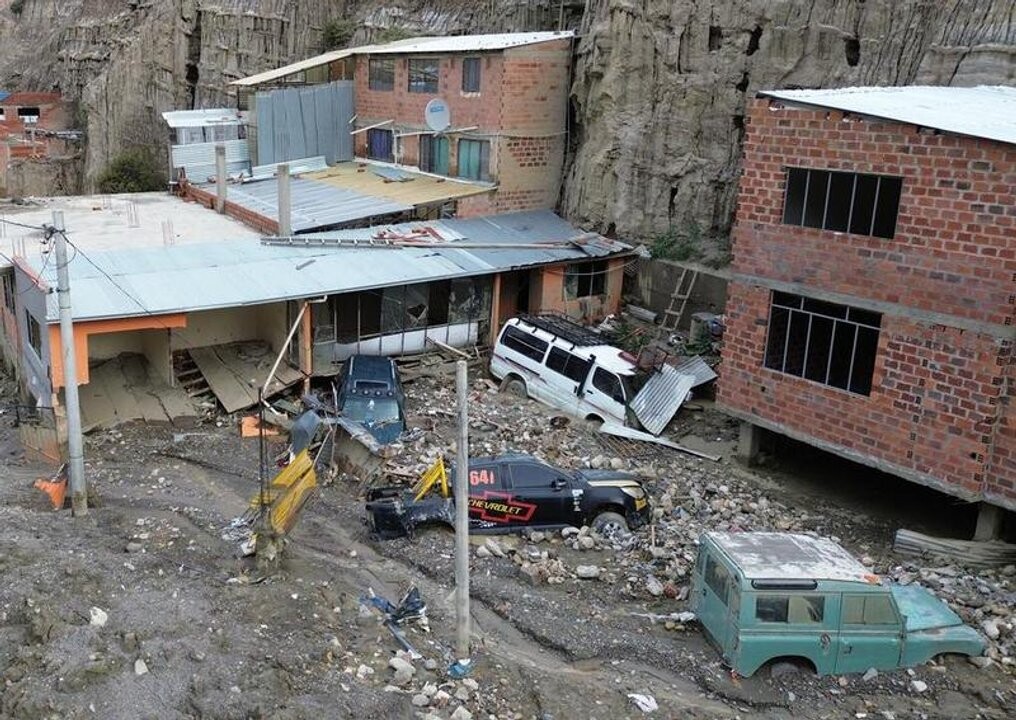
The governments in Bolivia are facing difficulties due to a lack of resources; therefore, the Government is assuming much of the emergency response. The Deputy Minister of Civil Defense, Juan Carlos Calvimontes, expressed his concern about the scarcity of resources in the governments by stating: "They no longer have resources to handle the emergency. We are entering a critical period." Calvimontes made an urgent call to the Legislative Power to approve two international credits aimed at addressing the crisis, one of 75 million dollars from the Andean Development Corporation (CAF) and another of 250 million from the Inter-American Development Bank (IDB).
The intense rainy season that has been affecting Bolivia since November 2024 is expected to continue until April and has already claimed a significant human cost. According to information from the Deputy Ministry of Civil Defense, there are reports of 40 dead, seven missing, and more than 163,000 affected families. Calvimontes pointed out that an increase in the number of victims is expected as damages are assessed. Recently, 80 homes in a neighborhood of La Paz suffered a landslide due to the saturated ground and rocky composition of the area, putting residents and local infrastructure at risk.
In light of this situation, the municipality of La Paz declared the area as "habitable" and ordered the total evacuation of the affected families to prevent further losses. The population was urged not to enter the restricted area due to the high risk of new landslides. So far, 163,193 affected and impacted families have been recorded, with 1,086 damaged homes, mainly in the department of La Paz. From November 2024 to March 9, the rains have impacted 105 municipalities, of which 37 have already declared a municipal emergency.